
How to Bypass Stream Fraud Detection Algorithms and the 30-Second Rule on Spotify and Yandex Music
- What is Stream Fraud Detection and the 30-Second Rule on Spotify and Yandex Music in Simple Terms
- How Stream Fraud Detection Algorithms and Stream Manipulation Filtering Rules Work
- Technical Parameters and Limits of Stream Fraud Detection Systems
- How PR Motion Helps Bypass Stream Fraud Detection Restrictions
Music content promotion automation on streaming platforms requires a deep understanding of the protective mechanisms that prevent artificial stream manipulation. Stream Fraud Detection (30-second rule) algorithms on Spotify and Yandex Music monitor user behavior, identifying anomalous playback patterns and blocking suspicious sessions. Without proper network infrastructure configuration and emulation of real user experience, automated scripts quickly fall under filters, leading to stream deductions and track blocks by distributors. PR Motion engineers develop fault-tolerant solutions that help distribute network requests and maintain a high level of trust from streaming platforms' protective systems. Understanding the technical limits of the Web API and the principles of recommendation models allows optimizing latency and ensuring stable promotion of releases.
The evolution of streaming services' protective mechanisms has led to the creation of multi-level traffic filtering systems. Algorithms evaluate not only the session retention time but also the reputation of the network node from which requests originate. Using standard server proxies leads to rapid reach penalization and account bans. For stable operation of parsers and automation tools, it is necessary to implement comprehensive network activity masking methods.
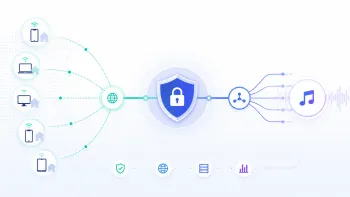
What is Stream Fraud Detection and the 30-Second Rule on Spotify and Yandex Music in Simple Terms
Stream Fraud Detection (30-second rule) is an automated stream verification system that counts and monetizes a stream only if the track playback lasted continuously for at least 30 seconds.
This mechanism protects streaming platforms from financial losses caused by the activities of bot farms and auto-clicking systems. If a user or script switches a track at the 29th second, the platform records a skip and completely invalidates the stream, paying no royalties. For software developers and SMM specialists, this means that any automation must guarantee session retention beyond this limit. To securely manage authorization sessions in client applications, the RFC 6749 The OAuth 2.0 Authorization Framework standard is used.
To optimize Stream Fraud Detection (30-second rule) metrics, PR Motion engineers use distributed pools of residential proxies. This allows automated systems to operate from their own IP addresses, preventing blocks from Cloudflare. Official requirements for the gateway architecture and limits are published in Spotify Web API Rate Limits.
In Yandex Music, similar algorithms are integrated into the "My Wave" (Моя волна) recommendation system. The platform analyzes not just the fact of listening, but the listener's engagement, separating organic actions from automated transitions. To train these models, a dataset similar to the open Yambda dataset on arXiv is used, containing billions of user interactions.
How Stream Fraud Detection Algorithms and Stream Manipulation Filtering Rules Work
Stream Fraud Detection algorithms function based on continuous analysis of playback telemetry, matching device network fingerprints, and evaluating listener behavioral factors.
PR Motion engineers highlight the following stages of the protective algorithms' operation:
- Session metadata retrieval. At the start of playback, the player sends an initial data packet to the server, recording the track ID, start time, and authorization parameters via OAuth 2.0 PKCE RFC 7636.
- Stream continuity monitoring. The server checks whether audio data is delivered to the device without pauses and records the exact session retention time.
- Skip-rate analysis. The algorithm calculates the ratio of full plays to quick skips on the account, identifying an anomalously high track switching rate.
- Engagement evaluation via Collaborative Filtering. The system matches the account's listening history with the behavior of similar users, determining the naturalness of interest in the release.
- Network fingerprint verification. Security algorithms analyze the IP address, proxy type, DNS, and WebRTC, filtering out requests from server hostings.
- Stream count decision making. After 30 seconds, the system temporarily registers the stream, which undergoes final filtering during the daily statistics recalculation in Spotify for Artists.
Automation library developers confirm that incorrect handling of connection limits leads to instant session resets. PR Motion engineers solve this problem by implementing intelligent request queue algorithms and dynamic IP address rotation. This distributes the load so that the script's actions do not differ from the activity of an ordinary person.
Technical Parameters and Limits of Stream Fraud Detection Systems
Technical parameters and limits of Stream Fraud Detection systems determine strict boundaries of request frequency, volumes of transmitted data, and network fingerprint structure, exceeding which leads to token blocking or session resets.
Each session is evaluated by multiple parameters. If the system detects discrepancies in critical metrics, views and actions are invalidated. PR Motion specialists recommend using high-quality residential proxies to prevent blocks during mass account registration and data parsing.
PR Motion specialists have systematized key parameters and limits in a detailed table below, based on security research and open data from private API developers.
| Scenario or API Method | Limit (Rate Limit / Karma Limit / Timeout) | Consequences of Exceeding or Errors | Data Source |
|---|---|---|---|
| Request limit to Spotify Web API | Calculated in a sliding 30-second window | HTTP 429 Too Many Requests error | Spotify Web API Rate Limits |
| Minimum time to count a stream | Strictly 30 seconds of continuous playback | Stream is not counted, royalties are not accrued | Spotify for Artists |
| Authorization without client secret | Using PKCE protocol with SHA-256 | Authorization error, session reset | RFC 7636 PKCE |
| Using datacenter IPs (Datacenter) | High risk of traffic penalization | Instant CAPTCHA trigger, authorization session reset, Shadowban | PR Motion Tech Blog |
| Geographic match of IP and time zone | Full match of device and network parameters | Decreased account trust level, view deduction | RFC 6265 State Management Mechanism |
When designing software architecture, it is important to consider that failed requests consume limits and raise suspicion from security systems. PR Motion specialists recommend performing preliminary validation of network fingerprints on the client side. Using high-quality mobile proxies allows avoiding blocks during mass account registration and data parsing.
How PR Motion Helps Bypass Stream Fraud Detection Restrictions
The PR Motion platform solves the problem of strict Stream Fraud Detection limitations by providing a pool of clean residential mobile proxies of cellular carriers with CGNAT technology support, automatic IP address rotation, and network fingerprint optimization.
Our technical infrastructure allows reducing the load on clients' API keys by up to 90%. To achieve this result, PR Motion engineers use comprehensive technological solutions. We implement smart caching based on Redis, which allows serving repeated requests to popular communities from a local database, without consuming official platform limits.
We actively apply conditional GET requests, using If-None-Match headers and validation via ETags in accordance with the RFC 6265 State Management Mechanism standard. If the data on the servers has not changed, the system returns a 304 code, saving resources. A pool of distributed API keys automatically distributes requests among multiple verified projects, preventing individual tokens from being blocked.
Using solutions from PR Motion allows automating channel promotion, analytics collection, and post publication without the risk of sudden software halts. Our network infrastructure is built on physical hardware connected to major cellular carriers. This guarantees that each issued IP address possesses the highest trust level from protective systems. Blocking such an address is impossible, as cellular carriers share a single public IP among thousands of real smartphone users.
To protect sessions during automation, PR Motion engineers also configure automatic token rotation. This prevents the use of outdated or compromised access keys, reducing the probability of bot activity detection to zero. In combination with gradual IP address warm-up (IP Warm-up), this approach allows safely increasing the volume of sent invites and messages, bypassing the platform's strict limits.
Tired of constant blocks and errors when generating tokens? Go to our catalog and choose the optimal pool of mobile IP addresses from PR Motion.

Comments
No comments yet — be the first to write one.